

What Is Hollow Rod
A churn drill in which hollow rods replace the steel wire rope. The drilling fluid is pumped down the inside of the rods, and the chipping and fluid return to the surface on the outside.
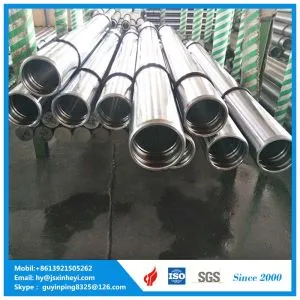
hollow steel rod also known as reinforcement steel are used to strengthen concrete. They do this by increasing the tensile strength of concrete as in reinforced concrete. Carbon steels are the most common type of hollow steel rod, but other kinds like stainless steel and composite bars are also in use. Physically, concrete and steel have similar thermal expansiveness and so they work well when combined into a strong all-weather material.
When used with concrete for construction, thinner concrete will do the job. hollow steel rod are extremely long-lasting, cost-effective, and responsive.
Benefits of Hollow Rod
Flexibility
Hollow Rod have greater flexibility than solid shafts of the same size, which can be an advantage in certain applications, such as in machinery that needs to accommodate vibration and other forms of movement.
Stiffness
Hollow Rod can be designed to be stiffer than solid shafts of the same weight, which can be an advantage in applications where torsional stiffness is critical, such as in precision equipment and machinery.
Material usage
Hollow Rod require less material than solid shafts of the same dimensions, which can lead to cost savings in manufacturing.
Thermal performance
Hollow Rod can be designed to have better thermal performance than solid shafts, as the internal cavity can be used for cooling or heating purposes.
-

Induction Hard Chrome Plated Rod Chrome Rod
What is Chrome Rod Chromed steel shafts are referred to as “Rods”, or “Cylinder Add to Inquiry -
Cold Drawn Fine Tolerance Precision Steel Tube
Cold Drawn Fine Tolerance Precision Steel Tube Precision in combination with a high quality surface Add to Inquiry -
CK45 Hot Rolled Hollow Hydraulic Cylinder Rod ISO9001: 20...
Hollow Hydraulic Cylinder Rod: Suitable for Elevator Cylinder, Telescope Cylinder, Scaling Add to Inquiry -
Hydraulic Chrome Plated Hollow Piston Rod
The product surface is specially ground and is processed by hard chromium plating technology, and Add to Inquiry -
Chrome Plating Hollow Piston Rod
Chrome plating hollow piston rod introduction The product surface is specially ground and is Add to Inquiry -
Hollow Hard Chrome Plated Bar Piston Rod Threaded Rod
Hollow hard chrome plated bar piston rod threaded rod introduction The Induction Hardened Chrome Add to Inquiry -
Hollow Hydraulic Piston Rod Hydraulic Honed Barrel
Chrome round hydraulic steel rod introduction The hollow hydraulic piston rod is a kind of hollow Add to Inquiry -
Steel Hydraulic Cylinder Piston Rod Steel Chrome Hydrauli...
Hydraulic cylinder hollow piston rod introduction The piston rod for hydraulic cylinder has high Add to Inquiry -
Steel Chrome Plated Rod Piston Rod For Automobile
Piston rod for automobile introduction The chromium-plated steel bar has been specially ground on Add to Inquiry -
Hollow Hard Chrome Plated Rod Hollow Pipe Bar
Hollow chrome piston rod introduction The hollow hard chromium-plated steel bar has an even wall Add to Inquiry -
Chrome Plated Steel Hollow Rod Hollow Chrome Round Bar
Steel hollow piston rod introduction The hollow chromium-plated steel bar is mainly used in piston Add to Inquiry -
Ck45 Hard Chrome Hollow Rod Hollow Cylinder Rod
Hollow cylinder piston rod introduction Ck45 hard chromium hollow bar carbon structural steel has Add to Inquiry


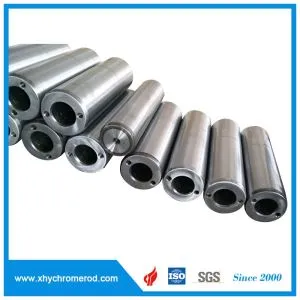


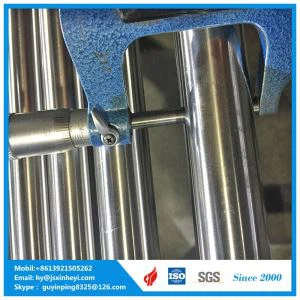
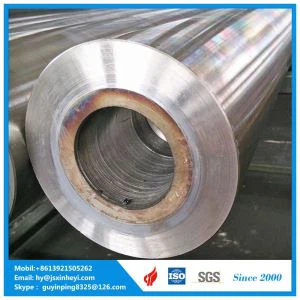
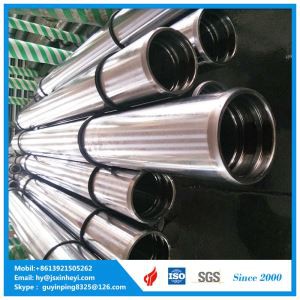
Why Choose Us
1. Our Certificates
We have already passed and strictly adhere to the ISO9001:2008 international quality system. Complete and advanced inspection apparatus, along with superior production equipment, adequately ensure product quality.
2. Our Company
Our factory is located in a city famous for peaches on the shores of Taihu Lake in Wuxi. Transportation is very convenient, with the Wuxi Airport and railway station only 30 minutes away, and we are about 1 kilometer from the entrance of Luqu of Wuxi—Yixing Expressway (part of the Shanghai-Nanjing Expressway). The factory covers an area of about 25,000 square meters and employs over 200 people, including more than 20 technical engineers.
3. Products Applications
Precision long small-diameter axles are widely used in the mining machinery industry, textile and printing machinery industries, etc., as hydraulic piston rods, guide rods, guide pins, and guide spindles. Hydraulic cylinder piston rods are mainly supplied as OEM parts to many large and medium enterprises, such as Heli Forklift Ltd, Hangzhou Forklift Ltd, and Sanyi Heavy Industry Ltd.
4. Sales Market
In recent years, we have enjoyed a good reputation for high quality and excellent after-sales service. Additionally, our products are exported to the USA, Canada, Southeast Asia, India, Brazil, etc.

Product Applications
Hydraulic cylinders on mobile equipment have used, for the most part, solid rods. It is well known, however, that a circular cross-section does not result in optimal utilization of the material from a flexural rigidity standpoint, and long cylinders (e.g., on hydraulic cranes) have been designed by utilizing hollow rods. In some designs, these rods are subjected internally to the same pressure as the cylinder, while in other designs they are non-pressurized. The question naturally arises as to the superiority of one design over the other.
Presents comparative data on pressurized and non-pressurized hollow rod cylinders and solid rod cylinders, based on the analysis of the cylinder-rod combination as a stepped beam-column structural member having a non-linear rotational joint at the cylinder rod interface. It is concluded that, generally speaking, hollow rod construction results in better utilization of materials than solid rods, but pressurization does not result in any significant increase in structural capability.
Cooperative Partner
The two most important features that distinguish a solid rod from a hollow one are the strength and stiffness of the rod. Usually, the strength defines the failing point of the rod whereas; stiffness is the limit at which the rod can deform. In the end, the only thing that matters is personal preferences.
This is due to the fact that a solid rod is free of layers and works as one solid stick. The simple phenomenon tells us that the internal strength of the rod matters a lot. This is an undeniable fact that there are many people who still believe that the higher the price of a fishing rod, the higher will be its efficiency.
On the contrary, this is not the case. The factors like rod power, rod action, rod length, and the material play an active role in the performance level of the rod. The power of the rod makes up the different varieties which include the ranges from ultra-light to extra heavy, with all the possible options fitting in between.
The bendability of the rod is very important. A seasoned fisherman knows how to control the pressure to control the action of the rod. Therefore, the selection of the solid or a hollow rod can determine the rod’s action as well. There are some other features that add to the performance which include the length of the entire fishing rod frame. The length acts as leveraging the momentum of the entire rod.
Many people rely on these qualities to understand and decide which rod suits them the best. This is why these factors carry much significance for determining the pros and cons of different types of fishing rods.

The Building Blocks Of The Product
A hollow rod comprising four plates, and the each plate having upper and lower edges, wherein the upper edge is provided with at least a projection, and a corresponding position of the lower edge is provided with at least a recess having a shape corresponding to the projection for inserting the projection of each plate into the recess of another plate adjacent to the upper edge thereof, and further forming a hollow rod.
Hollow Rod Key Features

Fast drilling and placing due to drilling, anchor installation and grouting in a single operation.
Neither separate anchor installation nor removal of casing and drill rods.
Similar installation methods for all ground conditions.
Choice of drill bits for different ground conditions.
The hollow core not only serves for flushing with air or water during drilling, but also for grouting the anchor tendon.
Flexibility in length by using couplers. Ability to work with small drill rigs without casing in restricted headroom conditions.


FAQ
Q: What Is a Hollow Rod?
A: These hollow rods are mainly used in manufacturing forged components and pressing materials and hence used mainly in making valve components.. Industry using forging hollow rods are forged components, industrial valves, defense components, watch case and automobile valves components.
Q: What Is Hollow Bar Used For?
A: It is used extensively by all industry sectors for a wide range of applications utilizing its considerable saving on machining time and weight over solid bar. Typical applications are: Bushes, Cylinders Various, Conveyor Rolls, Hollow Shafts, Hollow Parts and components, Nuts, Rings, etc.
Q: Is a Hollow Bar Stronger Than a Solid Bar?
A: A hollow bar is always round and can look like a pipe or a tube, however, typically the walls are much thicker. A hollow bar has the strength of a solid round bar, but since there is no center, there is less weight per foot which can sometimes save money, without compromising strength.
Q: Can A Hollow Structure Be Strong?
A: Although it may seem that the opposite is true, hollow core construction has been proven to be structurally stronger in a variety of engineering applications from ancient times to the present. Some examples of hollow core construction providing superior structural strength include: Roman viaducts.
Q: How Are Hollow Bars Made?
A: Hollow bar is not welded together. Instead, hollow bar is created using one of two processes. The first, called drilling, involves sending a drill through a solid bar stock. The second, called centrifugal casting, is when molten metal is poured into a cast as it undergoes high-speed rotation.
Q: What Materials Are Hollow Bars?
A: Hollow bar is non-alloy steel that contains 0.22% carbon. It is versatile steel that is formed with a hole in the centre to shorten lead times that would typically be spent drilling the hole through.
Q: What Is The Main Application Of Hollow Bars?
A: Hollow bars are used in production of valves and actuators (flowmeters, valves, filters, manifolds); pumps and compressor (vacuum equipment, hydraulic cylinders, pump housings); axes and shafts (rolls, guides, bushings, clamps, bearings); mechanical gaskets (seals, spacers, rings); connection components (fittings, ...
Q: What Is The Difference Between Solid Bar And Hollow Bar?
A: A hollow bar is always round and can look like a pipe or a tube, however, typically the walls are much thicker. A hollow bar has the strength of a solid round bar, but since there is no center, there is less weight per foot which can sometimes save money, without compromising strength.
Q: What Are The Benefits Of Hollow Structural Steel?
A: Hollow Structural Sections (HSS) | Steel Tube Institute
Benefits of Hollow Structural Sections (HSS)
High Strength-to-Weight Ratio. HSS often is the most economical structural member due to its structural efficiencies. ...
Aesthetic Appeal. ...
Less Surface Area for Coatings. ...
Closed Section.
Benefits of Hollow Structural Sections (HSS)
High Strength-to-Weight Ratio. HSS often is the most economical structural member due to its structural efficiencies. ...
Aesthetic Appeal. ...
Less Surface Area for Coatings. ...
Closed Section.
Q: What Is Hollow Tube?
A: A hollow tube is mounted on the burner and the light path passes along the length of the tube. Samples are nebulized and atoms enter the tube where they are prevented from dispersing throughout and beyond the flame by the physical presence of the tube.
Q: How Is Hollow Structural Steel Made?
A: Manufacture. Square HSS is made the same way as pipe. During the manufacturing process flat steel plate is gradually changed in shape to become round where the edges are presented ready to weld. The edges are then welded together to form the mother tube.
Q: What Are Metal Bars Used For?
A: Thanks to its versatile applications, steel bars find itself in the epicenter of most of engineering industries, be it automotive, textile, fabrication, construction, cement, ship building, paper and pulp, defence, heavy earth moving equipments or aerospace.
Q: How Do You Measure a Hollow Pipe?
A: ID - ID stands for the inside diameter of the pipe: This is measured by looking at a cross-section of hollow pipe and measuring the distance between the interior edges. Schedule: The schedule of a pipe tells us its wall thickness. Thickness can be obtained by taking the difference between the OD and ID.
Q: How Thick Is A Hollow Structural Section?
A: Wide range of size is available including one of the largest cold roll formed HSS in the world. Square size varies with each side from 50mm to 550mm or 2inch to 22inch. wall thickness from 1.6mm to 25mm or 0.063inch to 0.984inch.
Q: What Is The Difference Between a Metal Bar And a Metal Rod?
A: Rod mills are similar to bar mills at the front end, but the finishing end is different. Rods have a smaller section (5.5 to 15 millimetres in diameter) and are always coiled, while bars are normally shipped in cut length.
Q: Is Tubular Steel Hollow?
A: Tubes can be round steel tube, square, or rectangle. The name TUBE refers to round, square, rectangular and oval hollow sections that are used for pressure equipment, for mechanical applications, and for instrumentation systems. Tubes are indicated with outer diameter and wall thickness, in inches or in millimeters.
Q: Does Hollow Steel Rust?
A: A steel's metallurgy and its resistance to corrosion (rust) varies from manufacturer to manufacturer. Some steel hollow sections imported from outside Australia can corrode very quickly if not adequately protected.
Q: How Do You Calculate The Weight Of a Hollow Shaft?
A: The weight of a hollow pipe cylinder is determined by the volume multiplied by the density where the density is given in mass per unit volume. The density depends upon the unit in which the mass or weight is expressed, and upon the unit of volume used.
Q: What Is The Difference Between Hollow And Tubular?
A: Tubes are measured by their outer diameter and will have a wall thickness, typically measured in inches or fractions. A hollow bar is always round and can look like a pipe or a tube, however, typically the walls are much thicker.
Q: What Grade Is Hollow Bar?
A: Carbon Hollow Bar is supplied in two grades. Grade 20MnVS6 (WNr 1.5217) for sizes 32-250mm and Grade St 52.0 (WNr 1.0421) for all sizes 250-457 mm.
As one of the most professional hollow rod manufacturers and suppliers in China, we're featured by quality customized products and OEM service. Please rest assured to buy or wholesale bulk custom hollow rod at cheap price from our factory.
Cylinder round shaft, chrome hydraulic cylinder rods, hard chrome plated hollow piston rod