

What Is Shaft
A shaft is a structural member used to transmit torque. It can receive bending loads, tensile loads, compressive loads, or torsional loads acting alone or in combination with one another. Shafts can have different cross-sections, such as circular or non-circular, depending on the application. Circular cross-sections are commonly used for high torque applications due to uniform stress distribution. However, non-circular sections, like square or rectangular, are also used in electronic devices for ease of power transmission and assembly. Shafts can be made from various materials, including aluminum, dural rod material, and fibre composite material. They can also incorporate additional components, such as tubular inserts or drive shafts, for specific purposes like sports equipment or light detection.
Benefits of Shaft
Support
A shaft can provide support for other components of a machine or mechanism. It can act as a support structure for bearings, gears, and other components.
Stability
The use of shafts can increase the stability of a machine or mechanism by reducing the amount of flex or movement that can occur during operation.
Flexibility
Shaft can be used to transmit power in a variety of directions. This makes them useful for complex mechanisms that require power transmission in multiple directions.
Efficiency
Using shafts can improve the efficiency of a machine by reducing friction and wear. They can also be designed to optimize power transfer, improving overall performance.
-

Precision Linear Shafts Hollow Steel Shaft
What Is Hollow Steel Shaft There can be no doubt that shafts - in all of their specialised types Add to Inquiry -
Spline Shaft Hydraulic Shafts
Add to Inquiry -
Precision Hydraulic Motor Shaft
Add to Inquiry -
CNC High Precision Hard Chrome Shaft
CNC High Precision Hard Chrome Shaft Introduction ERSK linear shaft has very stringent quality Add to Inquiry -
Precision Linear Shafts Hollow Steel Shaft
Carbon steel shaft introduction The steel hard chromium-plated piston rod, after treatment of Add to Inquiry -
Hardened Precision Steel Shaft Tubular Shaft
Precision ground steel shaft introduction In automobile industry, hollow shaft plays an important Add to Inquiry -
Chrome Shifter Shaft Hardened Shafts
Graphite steel shafts introduction It is easy to generate cracks on the work-pieces with strict Add to Inquiry -
CK45 Short Hard Chrome Shaft Diameter 25-200mm
Jiangsu New Heyi Machinery Co., Ltd have rich experience of Chrome cylinder shaft with nearly 20 Add to Inquiry -
42CrMo4 Long Shaft with Induction Hardened
Jiangsu New Heyi Machinery Co., Ltd are making hard chrome rod with nearly 20 years, which applied Add to Inquiry -
CK45 Quenched and Tempered Hydraulic Cylinder Shaft with ...
Jiangsu New Heyi Machinery Co., Ltd have rich experience of CK45 steel shaft with nearly 20 years, Add to Inquiry -
42CrMo4 Induction Hardened Cylinder Shaft
Jiangsu New Heyi Machinery Co., Ltd have rich experience of hydraulic cylinder shaft with nearly 20 Add to Inquiry




Why Choose Us
1. Our Certificates
We have already passed and strictly adhere to the ISO9001:2008 international quality system. Complete and advanced inspection apparatus, along with superior production equipment, adequately ensure product quality.
2. Our Company
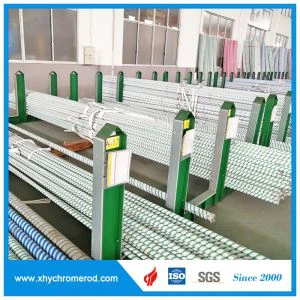
Our factory is located in a city famous for peaches on the shores of Taihu Lake in Wuxi. Transportation is very convenient, with the Wuxi Airport and railway station only 30 minutes away, and we are about 1 kilometer from the entrance of Luqu of Wuxi—Yixing Expressway (part of the Shanghai-Nanjing Expressway). The factory covers an area of about 25,000 square meters and employs over 200 people, including more than 20 technical engineers.
3. Products Applications
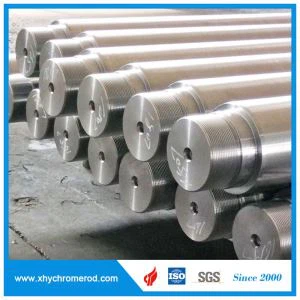
Precision long small-diameter axles are widely used in the mining machinery industry, textile and printing machinery industries, etc., as hydraulic piston rods, guide rods, guide pins, and guide spindles. Hydraulic cylinder piston rods are mainly supplied as OEM parts to many large and medium enterprises, such as Heli Forklift Ltd, Hangzhou Forklift Ltd, and Sanyi Heavy Industry Ltd.
4. Sales Market
In recent years, we have enjoyed a good reputation for high quality and excellent after-sales service. Additionally, our products are exported to the USA, Canada, Southeast Asia, India, Brazil, etc.
Types of Shaft
Shafts are mainly classified into two types:
Transmission shafts are used to transmit power between the source and the machine absorbing power. e.g., countershafts, line shafts, and all factory shafts.
Machine shafts are an integral part of the machine itself. e.g., crankshaft
Axle shafts are used in vehicles.
A spindle shaft is a rotating shaft with a fixture for holding a tool or a workpiece.

Material of Shaft

The material used for ordinary shafts is mild steel. When high strength is required, alloy steel such as nickel, nickel-chromium, or chromium-vanadium steel is used. Shafts are generally formed by hot rolling and finished to size by cold drawing or turning and grinding.
The material used for the shafts must have the following properties:
It should have high strength.
It should have good mechanization.
It should have a low-notch sensitivity factor.
It should have good heat treatment properties.
It should have high wear-resistant properties.

Application of Shaft
It is used for bolts, axles, crankshafts, forged connecting rods, light gears, torsion bars, guide rods, etc.
Other substances include sulfurized SAE 1137, SAE 1117, SAE 1144, cold-rolled SAE 1018, and hot-rolled SAE 1035. A ground stock of any substance is employed on particular CNC turning machines.
In general, the sulfurized and cold-rolled steels will increase prices relatively 15% more than HRS and will perform better. Machining trials are required to be implemented in order to control the extra cost. Because all shaft-turning devices perform differently, there is no established substance or machining maintenance.
Components of Shaft
Choosing the appropriate material can improve reliability. Once considering the best substance for the device and its shaft, you should primarily think about the cost.
The material used for a typical motor shaft is mild steel, but once high strength is needed, alloy steel such as chromium-vanadium, nickel, and nickel-chromium is used.
Most motor constructors apply SAE 1045 in either hot-rolled (HRS) or cold-rolled steel (CRS). C1045 is a moderate carbon, moderate tensile steel provided as forged or normalized. This steel demonstrates appropriate toughness, strength, and wear resistance.


FAQ
Q: How Old Is The Original Shaft?
A: It's difficult to appreciate from today's perspective the impact Shaft made in 1971, and Roundtree, who died on Tuesday, aged 81, was a huge part of that. He wasn't just “the first Black action hero”, he introduced a whole new type of Black masculinity to mainstream cinema.
Q: What Is a Shaft In Architecture?
A: The shaft, which rests upon the base, is a long, narrow, vertical cylinder that in some orders is articulated with fluting (vertical grooves). The shaft may also taper inward slightly so that it is wider at the bottom than at the top.
Q: What Gun Did Shaft Use?
A: Glock 17. John Shaft (Richard Roundtree) appears to wield a Glock 17 pistol. Glock 17 9x19mm (3rd generation). In the center, John Shaft (Richard Roundtree) appears to wield a Glock 17 pistol.
Q: What Causes a Shaft To Wear Out?
A: In the mining industry, shafts can become worn or damaged due to vibration, friction and abrasive media. In the marine industry, gland packing and bushing damage to the shaft together with sand abrasion and seawater exposure can lead to erosion-corrosion on shafts.
Q: How Do You Check a Shaft?
A: The shaft runout shall be measured with the indicator stationary with respect to the motor and with its point at the end of the finished surface of the shaft as illustrated in the picture below. Read the maximum and minimum values on the indicator as the shaft is rotated slowly through 360 degrees.
Q: What Is Shaft Looseness?
A: Looseness is characterized by the presence in the frequency spectrum of multiple harmonics of the shaft rotating speed. The vibration levels experienced by the machine are often important.
Q: Is Steel Shaft Better Than Graphite?
A: Graphite shafts are generally recommended for golfers with slower swing speeds, as they can help generate more clubhead speed and distance. Steel shafts, with their heavier weight and stiffer profile, are favoured by golfers with faster swing speeds, as they can provide better control and stability.
Q: Will a Softer Shaft Help My Slice?
A: They use stiff and stable profiles, often with very strong tip sections. To reduce a slice, you'll want to do the opposite. Unlike the pros, you should look for shafts with weaker tip sections that allow for more release of the club head as it comes into impact.
Q: What Is a Sliding Shaft?
A: SLIDE SHAFT. The NB slide shaft is used with bearings such as a slide bush in order to obtain highly accurate linear motion. When used in combination with a slide bush, the shaft performs as the inner race of the bearing system. The quality and accuracy of the shaft directly affect the performance of the slide bush.
Q: What Holds a Shaft In Place?
A: Commonly found in power transmission applications, shaft collars are ring-shaped plastic or metal devices that clamp around a shaft. The purpose of the collar is usually to hold motor components, gear assemblies, sprockets, bearings, and other parts in place and sometimes facilitate their proper movement.
Q: Why Are Shafts Stepped?
A: Shafts are manufactured in stepped as well as plain form. The main advantage of stepped shaft over plain shaft is its High Torsional Rigidity. Torsional Rigidity is defined as “The minimum force required to deform an object by twisting through a unit dimension.
Q: What Is a Shaft That Turns Called?
A: A line shaft is a power-driven rotating shaft for power transmission that was used extensively from the Industrial Revolution until the early 20th century.
Q: What Is Shaft In a Car?
A: noun. (Automotive engineering: Vehicle components, Engine, transmission, and exhaust) A drive shaft is a shaft in a vehicle that transfers power from the gearbox to the wheels. The coupling of the drive shaft to the gearbox allows for the movement of the axles.
Q: What Is Shaft Twisting?
A: Torsion of shafts is twisting of the shaft about its longitudinal axis. Torsion of shafts is a type of deformation in shafts. The moment which leads to a twisting moment is known as Torque.
Q: What Is Stiff Shaft?
A: Stiff flex shafts are less flexible and better suited for golfers with faster swing speeds — typically around 90 to 105 mph. Regular flex shafts, on the other hand, are more flexible and can accommodate golfers with average swing speeds — roughly between 80 and 95 mph.
Q: How Do Shafts Work?
A: Shaft Design - an overview | ScienceDirect Topics
The term shaft usually refers to a component of circular cross section that rotates and transmits power from a driving device, such as a motor or engine, through a machine. Shafts can carry gears, pulleys, and sprockets to transmit rotary motion and power via mating gears, belts, and chains.
The term shaft usually refers to a component of circular cross section that rotates and transmits power from a driving device, such as a motor or engine, through a machine. Shafts can carry gears, pulleys, and sprockets to transmit rotary motion and power via mating gears, belts, and chains.
Q: How Do You Know If Your Carrier Bearing Is Bad?
A: Your stock carrier bearing will tell you it's bad in a few different ways. Listen for a howling noise coming from your UTV. It will sound like loud tire noise. A bad bearing will also cause the center console and shifter to vibrate when you touch them.
Q: How Do I Know If My Drive Shaft Needs Balancing?
A: If a drive shaft is out of balance, the body of the truck or the seat will vibrate. If you are not feeling any vibration and the welding was performed correctly, I wouldn't be concerned.
Q: What Does a Bent Drive Shaft Feel Like?
A: Bent or damaged driveshaft: A bent or damaged driveshaft can cause vibration and noise, especially at high speeds. Worn universal joints: The universal joints at each end of the driveshaft can wear out over time, causing a clunking noise when accelerating or shifting gears.
Q: How Do You Fix a Driveshaft Vibration?
A: If it's a used driveshaft that is causing the vibration, sometimes an easy fix is to rotate the driveshaft 180 degrees in the differential yoke. This may help improve the balance. Of course, the universal joints and the driveshaft itself need to be closely inspected, looking for any wear or collision damage.
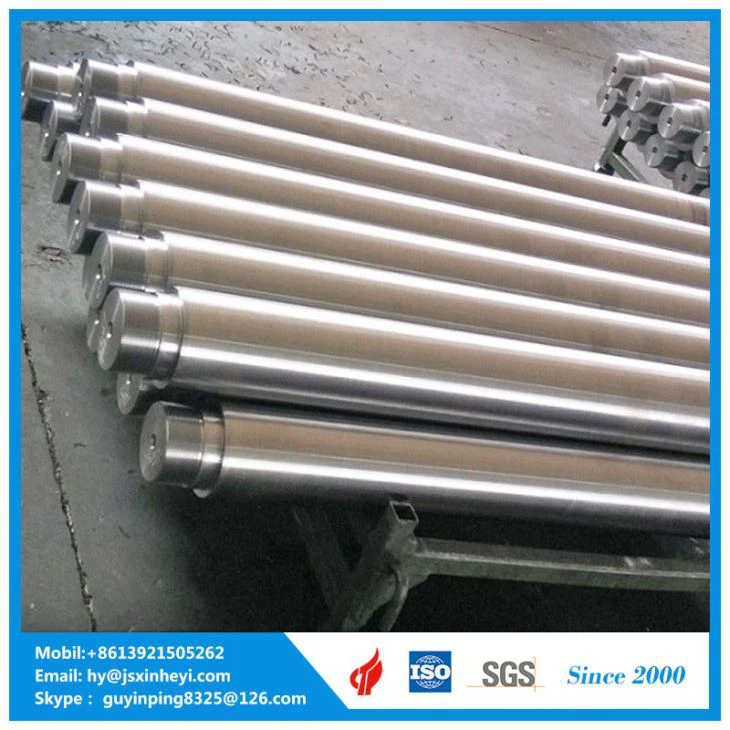
As one of the most professional shaft manufacturers and suppliers in China, we're featured by quality customized products and OEM service. Please rest assured to buy or wholesale bulk custom shaft at cheap price from our factory.
Chrome round rod, quenched and tempered chrome bar