

As a supplier of hard shafts, I often encounter inquiries about the standard hardness for a hard shaft. This topic is crucial as the hardness of a shaft significantly impacts its performance, durability, and suitability for various applications. In this blog, I'll delve into the factors that determine the standard hardness of a hard shaft, the common hardness ranges, and how these standards apply to our products.
Factors Determining the Standard Hardness of a Hard Shaft
The standard hardness of a hard shaft is not a one - size - fits - all value. It is influenced by several key factors:
Material Composition
The type of material used to manufacture the shaft plays a fundamental role in determining its hardness. For instance, steel shafts are among the most common. Different grades of steel have different inherent hardness characteristics. Carbon steel shafts, such as CK45, can achieve a certain level of hardness through heat treatment processes like quenching and tempering. Alloy steels, on the other hand, contain additional elements like chromium, nickel, and molybdenum, which can enhance the shaft's hardness, strength, and wear resistance.
Application Requirements
The intended application of the hard shaft is another critical factor. In high - load applications, such as heavy - duty machinery or automotive transmissions, a higher hardness is typically required to withstand the significant forces and prevent deformation. For example, in a hydraulic cylinder, the shaft needs to be hard enough to resist wear from the piston movement and the pressure of the hydraulic fluid. In contrast, in applications where flexibility or low - friction movement is more important, a lower hardness might be acceptable.
Manufacturing Processes
The manufacturing processes employed also affect the shaft's hardness. Heat treatment processes, including quenching, tempering, and case hardening, can significantly increase the hardness of the shaft. Quenching involves rapidly cooling the heated shaft to transform its microstructure and increase hardness. Tempering is then often performed to relieve internal stresses and improve toughness. Surface treatment methods like hard chrome plating can also enhance the surface hardness and corrosion resistance of the shaft.
Common Hardness Ranges for Hard Shafts
Hardness is typically measured using various scales, with the Rockwell and Brinell scales being the most common in the industry.
Rockwell Hardness
The Rockwell hardness scale is widely used for measuring the hardness of metals. For hard shafts, the Rockwell C scale (HRC) is often used. In general, hard shafts used in industrial applications can have a Rockwell hardness ranging from 40 HRC to 60 HRC. Shafts with a hardness of around 40 - 45 HRC are suitable for applications with moderate loads and wear requirements. For more demanding applications, such as in high - speed machinery or precision equipment, shafts with a hardness of 50 - 60 HRC may be required.
Brinell Hardness
The Brinell hardness test involves pressing a hard ball into the surface of the material and measuring the diameter of the indentation. The Brinell hardness number (HB) is then calculated. Hard shafts may have a Brinell hardness ranging from 200 HB to 500 HB, depending on the material and application.
Our Hard Shaft Products and Their Hardness Standards
As a hard shaft supplier, we offer a wide range of products to meet different customer needs.
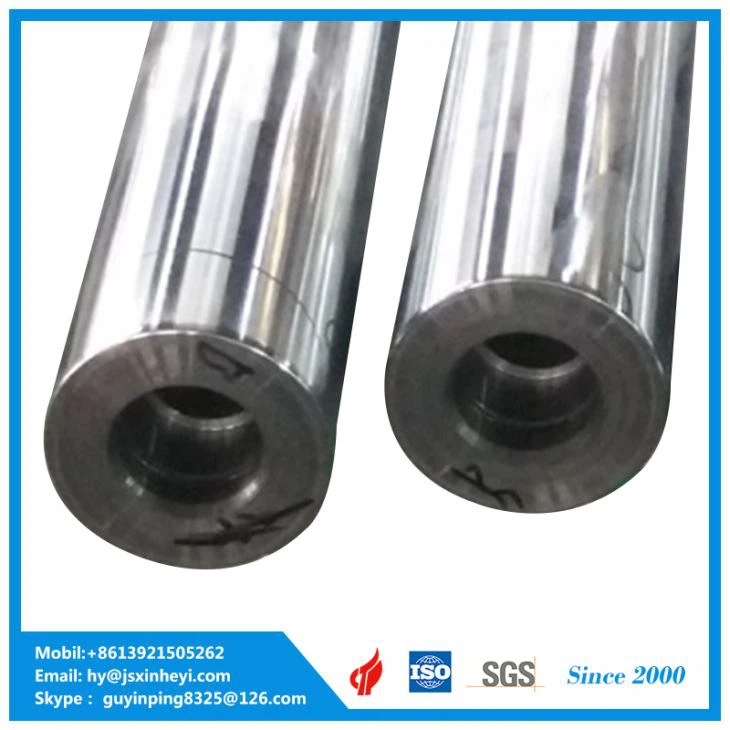
Precision Linear Shafts Hollow Steel Shaft
Our Precision Linear Shafts Hollow Steel Shaft is designed for applications requiring smooth linear motion. These shafts are made from high - quality steel and undergo a precise heat treatment process to achieve a hardness of around 50 - 55 HRC. This hardness level ensures excellent wear resistance and dimensional stability, making them ideal for use in linear guides, automation equipment, and other precision machinery.
Hardened Precision Steel Shaft Tubular Shaft
The Hardened Precision Steel Shaft Tubular Shaft is another popular product in our portfolio. These shafts are hardened to a Rockwell hardness of 55 - 60 HRC, providing high strength and wear resistance. They are suitable for applications in hydraulic systems, automotive components, and other high - performance machinery where the shaft needs to withstand heavy loads and high - speed operation.
CK45 Quenched and Tempered Hydraulic Cylinder Shaft with Hard Chrome Plating
Our CK45 Quenched and Tempered Hydraulic Cylinder Shaft with Hard Chrome Plating is specifically designed for hydraulic cylinders. The CK45 steel is first quenched and tempered to achieve a hardness of 40 - 45 HRC, which provides good toughness and strength. The hard chrome plating on the surface further enhances the shaft's hardness, wear resistance, and corrosion resistance, ensuring a long service life in hydraulic applications.
Importance of Adhering to Hardness Standards
Adhering to the appropriate hardness standards is essential for several reasons:

Performance and Durability
A shaft with the correct hardness will perform optimally in its intended application. It will be able to withstand the forces and stresses without deforming or wearing out prematurely. This leads to improved equipment reliability and reduced maintenance costs over time.
Compatibility
Meeting the standard hardness ensures that the shaft is compatible with other components in the system. For example, in a mechanical assembly, a shaft with the wrong hardness may cause excessive wear on the mating parts, leading to premature failure of the entire system.
Safety
In some applications, such as in the automotive and aerospace industries, the hardness of the shaft is directly related to safety. A shaft that is too soft may fail under load, potentially causing accidents or malfunctions.
Contact Us for Your Hard Shaft Needs
If you are in the market for high - quality hard shafts, we are here to help. Our team of experts can assist you in selecting the right shaft with the appropriate hardness for your specific application. Whether you need a standard product or a custom - made shaft, we have the capabilities and experience to meet your requirements. Don't hesitate to contact us to start a procurement discussion and find the best hard shaft solution for your business.
References
- Callister, W. D., & Rethwisch, D. G. (2017). Materials Science and Engineering: An Introduction. Wiley.
- ASM Handbook Committee. (2000). ASM Handbook, Volume 4: Heat Treating. ASM International.