

Hey there! As a round bar supplier, I've gotten tons of questions about the difference between precision and non - precision round bars. It's a topic that can be a bit confusing, but don't worry, I'm here to break it down for you in a way that's easy to understand.
Let's start with the basics. A round bar is exactly what it sounds like - a bar with a circular cross - section. These bars are used in a wide range of industries, from construction to manufacturing, and even in some consumer products.

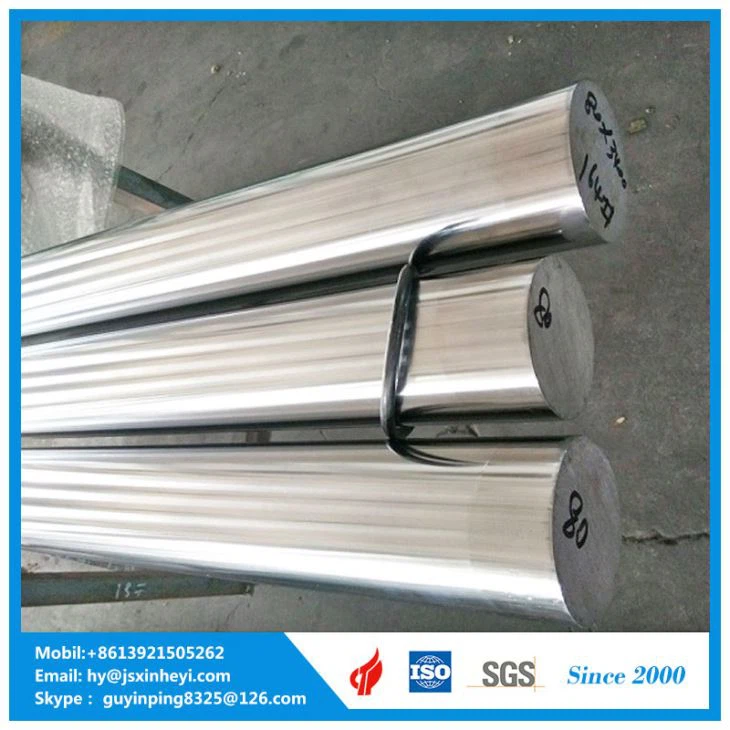
Precision Round Bars
Precision round bars are the high - end players in the round bar game. They're made with a super high level of accuracy. When we talk about precision, we're looking at things like tight tolerances. Tolerances are basically the allowable amount of variation in the dimensions of the bar. For precision round bars, these tolerances can be as small as a few thousandths of an inch.
One of the main reasons for using precision round bars is when you need a part to fit perfectly into a specific assembly. For example, in the aerospace industry, where safety and performance are crucial, precision round bars are used to make components like shafts and fasteners. A tiny deviation in the size of these parts could lead to major problems, so precision is key.
Another advantage of precision round bars is their surface finish. They usually have a very smooth surface, which can be important in applications where friction needs to be minimized. For instance, in a high - speed machinery, a smooth - surfaced precision round bar can reduce wear and tear on other parts, leading to longer equipment life.
We offer a great selection of precision round bars, like the China Factory OEM Micro Alloy Steel Chrome Piston Rod With High Strength. This piston rod is made with precision in mind, ensuring a perfect fit and high performance.
Non - Precision Round Bars
On the other hand, non - precision round bars are more of the workhorses. They're made with less strict tolerances, which means there's a bit more variation in their dimensions. But that doesn't mean they're not useful. In fact, they're used in a whole bunch of applications where a high level of precision isn't necessary.
One of the biggest advantages of non - precision round bars is their cost. Since they don't require the same level of manufacturing precision, they're generally cheaper to produce. This makes them a great choice for applications where cost is a major factor. For example, in construction projects, non - precision round bars can be used for things like support structures or as reinforcement in concrete.
Non - precision round bars also have a wider range of surface finishes. They can have a rougher surface, which can actually be an advantage in some cases. For example, if you're using the bar for a decorative purpose or in an application where it needs to grip onto something, a rougher surface can provide better traction.
We have some great non - precision options too, like the Steel Round Rod Black Steel Pipe. This is a great example of a non - precision round bar that's strong and versatile, perfect for a variety of construction and general - purpose applications.
Manufacturing Processes
The manufacturing processes for precision and non - precision round bars are also quite different. Precision round bars often go through multiple stages of machining and finishing. They might start as a rough bar and then be turned, ground, and polished to achieve the desired dimensions and surface finish. This process is time - consuming and requires specialized equipment, which is one of the reasons why precision round bars are more expensive.
Non - precision round bars, on the other hand, can be made using simpler processes like hot rolling. Hot rolling involves passing the metal through a series of rollers at high temperatures to shape it into a round bar. This process is faster and less expensive, but it doesn't allow for the same level of precision as the machining processes used for precision round bars.
Quality Control
Quality control is another area where precision and non - precision round bars differ. For precision round bars, quality control is extremely strict. Every single bar is carefully measured and inspected to make sure it meets the specified tolerances. This might involve using high - tech measuring tools like coordinate measuring machines (CMMs) to ensure accuracy.
For non - precision round bars, the quality control is less rigorous. While they still need to meet certain basic standards, the allowable variation in dimensions is greater, so the inspection process is not as detailed.
Applications
As I mentioned earlier, the applications for precision and non - precision round bars are quite different. Precision round bars are commonly used in industries where high precision and performance are required. Some of these industries include aerospace, automotive (especially in high - performance engines), and medical device manufacturing.
Non - precision round bars, on the other hand, are used in a much broader range of applications. They're used in construction, general manufacturing, and even in some DIY projects. For example, if you're building a simple fence or a small shed, non - precision round bars can be a cost - effective option.
We also have a great product called Micro Alloy Steel Hard Chrome Plated Bar with Good Surface Roughness. This bar can be used in both precision and non - precision applications, depending on your needs. It combines the strength of micro - alloy steel with the benefits of hard chrome plating, providing a durable and versatile option.
Conclusion
So, to sum it all up, the main difference between precision and non - precision round bars lies in their tolerances, surface finish, manufacturing processes, quality control, and applications. Precision round bars are all about accuracy and performance, while non - precision round bars are more about cost - effectiveness and versatility.
If you're in the market for round bars, whether it's a precision piston rod for a high - tech project or a non - precision bar for a simple construction job, we've got you covered. We're here to help you find the right product for your specific needs.
If you're interested in purchasing any of our round bars, or if you have any questions, don't hesitate to reach out. We're always happy to have a chat and help you make the best decision for your project. Let's start a conversation and see how we can work together to get you the perfect round bars!
References
- "Metals Handbook: Properties and Selection: Irons, Steels, and High - Performance Alloys" by ASM International
- "Manufacturing Engineering and Technology" by S. Kalpakjian and S. Schmid