

As a supplier of 40Cr rods, I often encounter inquiries from customers about enhancing the corrosion resistance of these rods. The 40Cr rod is a high - quality alloy structural steel widely used in various industries, such as automotive, machinery manufacturing, and hydraulic systems. However, in many harsh working environments, corrosion can significantly reduce the service life and performance of 40Cr rods. Therefore, the question of whether 40Cr rods can be coated to enhance corrosion resistance is of great interest.
Understanding 40Cr Rods
First, let's briefly understand the characteristics of 40Cr rods. 40Cr is a medium - carbon alloy steel with chromium as the main alloying element. It has high strength, good toughness, and excellent hardenability. These properties make 40Cr rods suitable for applications that require high - strength and wear - resistant components, such as shafts, gears, and piston rods.
However, like many steels, 40Cr is prone to corrosion when exposed to corrosive media such as moisture, oxygen, and certain chemicals. Corrosion can lead to surface pitting, rusting, and a decrease in mechanical properties, which may ultimately cause the failure of the component.
Coating Options for 40Cr Rods
There are several coating methods available to enhance the corrosion resistance of 40Cr rods. Each method has its own advantages and disadvantages, and the choice of coating depends on factors such as the specific application environment, cost, and performance requirements.
Hard Chrome Plating
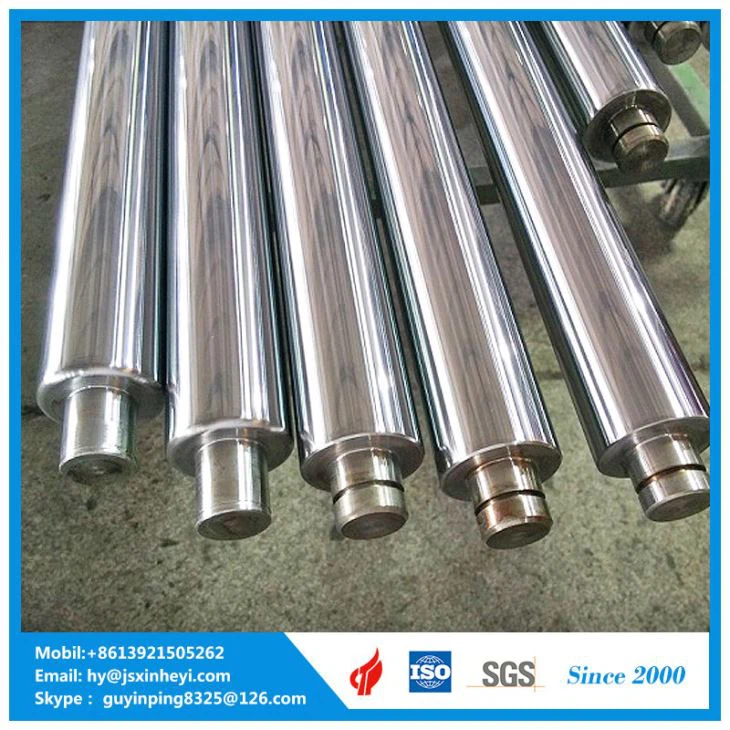
Hard chrome plating is one of the most common coating methods for 40Cr rods. It involves depositing a layer of chromium onto the surface of the rod through an electroplating process. The chromium layer provides excellent corrosion resistance, wear resistance, and a smooth surface finish.
Hard chrome - plated 40Cr rods are widely used in hydraulic systems. For example, the Piston Rod For Hydraulic Cylinders often requires a hard chrome - plated surface to withstand the high - pressure and corrosive hydraulic fluids. The chrome layer acts as a barrier, preventing the rod from coming into direct contact with the corrosive media and reducing the risk of corrosion.
The advantages of hard chrome plating include its high hardness, good adhesion to the substrate, and excellent corrosion resistance in many environments. However, there are also some drawbacks. The electroplating process can be environmentally unfriendly due to the use of hexavalent chromium, which is a toxic substance. In addition, hard chrome plating may have some limitations in terms of thickness control and the ability to coat complex shapes.

Zinc Coating
Zinc coating is another popular option for enhancing the corrosion resistance of 40Cr rods. Zinc is a sacrificial metal, which means that it corrodes preferentially to the underlying steel. When a zinc - coated 40Cr rod is exposed to a corrosive environment, the zinc layer will corrode first, protecting the steel from corrosion.
There are two main types of zinc coating: hot - dip galvanizing and electro - galvanizing. Hot - dip galvanizing involves dipping the rod into a bath of molten zinc, resulting in a thick and durable zinc layer. Electro - galvanizing, on the other hand, deposits a thinner layer of zinc onto the rod through an electroplating process.
Zinc - coated 40Cr rods are commonly used in outdoor applications where they are exposed to moisture and oxygen. The zinc coating provides long - term corrosion protection and is relatively cost - effective. However, the appearance of zinc - coated rods may not be as smooth as hard chrome - plated rods, and the zinc layer may be more prone to scratching and damage.
Organic Coatings
Organic coatings, such as epoxy coatings and polyurethane coatings, can also be applied to 40Cr rods to enhance corrosion resistance. These coatings form a protective film on the surface of the rod, preventing the penetration of corrosive media.
Organic coatings offer several advantages. They can be easily applied to complex shapes, and they can provide a wide range of colors and finishes. In addition, organic coatings can be formulated to have specific properties, such as high flexibility, chemical resistance, and UV resistance.
For example, in some applications where the 40Cr rod is exposed to both corrosion and abrasion, a polyurethane coating can be used to provide both corrosion protection and wear resistance. However, organic coatings may have a lower hardness compared to hard chrome plating and zinc coating, and they may require periodic maintenance to ensure long - term performance.
Performance Evaluation of Coated 40Cr Rods
When considering coating options for 40Cr rods, it is important to evaluate the performance of the coated rods. There are several methods for evaluating the corrosion resistance of coated 40Cr rods, including salt spray testing, immersion testing, and electrochemical testing.
Salt spray testing is a widely used method for evaluating the corrosion resistance of coatings. In this test, the coated rod is exposed to a salt - laden mist for a specified period of time, and the degree of corrosion is then evaluated. A good - quality coating should show minimal signs of corrosion after the test.
Immersion testing involves immersing the coated rod in a corrosive solution for a certain period. This test can simulate the actual service environment more accurately and provide information about the long - term corrosion resistance of the coating.
Electrochemical testing measures the electrochemical properties of the coated rod, such as the corrosion potential and the polarization resistance. These parameters can provide insights into the corrosion behavior of the coating and the substrate.
Case Studies
Let's look at some real - world case studies to illustrate the effectiveness of coating 40Cr rods for corrosion resistance.
In a hydraulic system manufacturing company, they used Hydraulic Hard Chrome Plated Rod Induction Steel Rod for their hydraulic cylinders. Before using the hard chrome - plated rods, they had problems with rod corrosion, which led to frequent cylinder failures. After switching to hard chrome - plated rods, the corrosion rate was significantly reduced, and the service life of the hydraulic cylinders increased by more than 50%.
In an outdoor construction project, zinc - coated 40Cr rods were used for the structural components. The rods were exposed to the elements for several years, and the zinc coating effectively protected the rods from corrosion. The project team found that the zinc - coated rods showed only minor surface corrosion, and the mechanical properties of the rods remained intact.
Conclusion
In conclusion, 40Cr rods can be coated to enhance their corrosion resistance. There are several coating options available, including hard chrome plating, zinc coating, and organic coatings, each with its own advantages and disadvantages. The choice of coating depends on the specific application requirements, cost, and environmental considerations.
As a supplier of 40Cr rods, we are committed to providing our customers with high - quality coated rods that meet their specific needs. We have extensive experience in coating 40Cr rods and can offer professional advice on the best coating solution for your application.
If you are interested in purchasing coated 40Cr rods or have any questions about enhancing the corrosion resistance of these rods, please feel free to contact us for a detailed discussion. We look forward to working with you to find the most suitable solution for your project.
References
- ASM Handbook Volume 13A: Corrosion: Fundamentals, Testing, and Protection.
- Metals Handbook Desk Edition, Third Edition.
- "Corrosion Resistance of Coated Steels" by various authors in the Journal of Materials Science and Technology.