

Hey there! As a 40Cr bar supplier, I often get asked about the differences between normalizing and annealing 40Cr bars. It's a super important topic, especially for those in the manufacturing and engineering fields. So, let's dive right in and break it down.
What's 40Cr Bar Anyway?
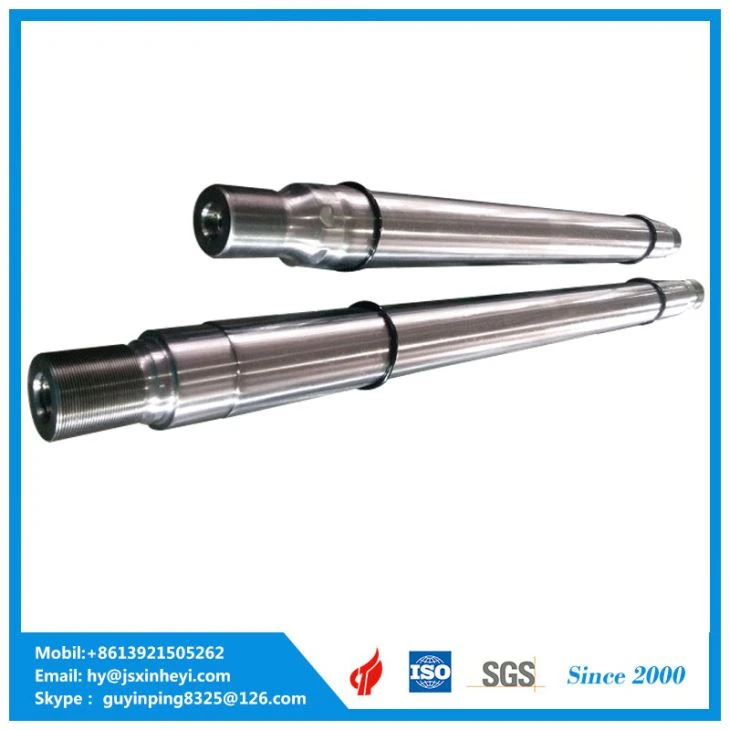
First off, 40Cr is a widely - used alloy steel. It's got chromium in it, which gives it some great properties like high strength, good hardenability, and decent wear resistance. This makes 40Cr bars a top choice for all sorts of applications, from Piston Rod For Hydraulic Cylinders to various mechanical parts.
Normalizing 40Cr Bars
Normalizing is a heat - treatment process. Here's how it works. We heat the 40Cr bar to a specific temperature, usually around 850 - 870°C for 40Cr steel. This temperature is high enough to make the steel's structure change. The grains in the steel get a bit looser and start to transform into austenite, which is a more uniform and stable structure at high temperatures.
Once the bar reaches the right temperature, we hold it there for a while to make sure the transformation is complete. Then, we let it cool in air. Air cooling is a key part of normalizing. It's relatively fast compared to some other cooling methods.
Benefits of Normalizing
The main advantage of normalizing 40Cr bars is that it refines the grain structure. A finer grain structure means the bar has better mechanical properties. It becomes stronger and more ductile. For instance, in applications where the bar needs to withstand high stress, like in High Pressure Hydraulic Cylinder Chromed Plated Piston Rod, a normalized 40Cr bar can handle the pressure better.
Normalizing also reduces internal stresses in the bar. When the bar is manufactured or has gone through some previous processes, there can be internal stresses that might cause it to crack or deform over time. Normalizing helps to relieve these stresses, making the bar more stable and durable.

Annealing 40Cr Bars
Annealing is another heat - treatment process, but it's a bit different from normalizing. There are actually different types of annealing, but for 40Cr bars, full annealing is often used.
In full annealing, we heat the 40Cr bar to a temperature above its critical point, usually around 860 - 880°C. Just like in normalizing, the steel turns into austenite at this high temperature. But then, the cooling process is the big difference. Instead of air - cooling like in normalizing, we cool the bar very slowly in a furnace. This slow cooling can take hours or even days, depending on the size of the bar.
Advantages of Annealing
The main benefit of annealing is that it softens the 40Cr bar. The slow cooling allows the carbon in the steel to form large, soft carbide particles, which reduces the hardness of the bar. This makes the bar easier to machine. If you're making complex parts out of the 40Cr bar, an annealed bar will be much easier to cut, drill, and shape, like in the production of CK45 Hard Chrome Piston Rod Steel Bar.
Annealing also improves the bar's ductility. A more ductile bar can be bent or stretched without breaking easily. This is useful in applications where the bar might need to undergo some form of deformation during the manufacturing process or in service.
Key Differences
Cooling Rate
The most obvious difference between normalizing and annealing is the cooling rate. Normalizing has a relatively fast air - cooling process, while annealing has a very slow furnace - cooling process. This difference in cooling rate leads to different microstructures in the 40Cr bar.
Hardness and Strength
Normalized 40Cr bars are generally harder and stronger than annealed ones. The fast cooling in normalizing results in a finer grain structure and more martensite (a hard phase in steel), which increases the strength and hardness. Annealed bars, on the other hand, are softer due to the slow cooling and the formation of larger carbide particles.
Machinability
Annealed 40Cr bars are more machinable than normalized ones. The softness of the annealed bar makes it easier to cut and shape, reducing tool wear and making the machining process more efficient.
Application Suitability
If you need a 40Cr bar for an application that requires high strength and wear resistance, like in heavy - duty machinery or high - pressure components, a normalized bar is a better choice. But if you're doing a lot of machining and need a bar that's easy to work with, an annealed bar is the way to go.
Making the Right Choice
As a 40Cr bar supplier, I always tell my customers to think about their specific needs. If they're in a hurry to get the parts made and don't need extremely high strength, an annealed bar might save them time and money on machining. But if the end - use of the part demands high performance under stress, a normalized bar is the better option.
We can also provide customized heat - treatment services. Whether you need a batch of normalized 40Cr bars or annealed ones, we've got you covered. We use state - of - the - art equipment and follow strict quality control procedures to ensure that the bars meet your requirements.
Let's Talk Business!
If you're in the market for 40Cr bars and have questions about normalizing, annealing, or any other aspect, don't hesitate to reach out. We're here to help you make the best choice for your project. Whether you're working on hydraulic cylinders, mechanical parts, or anything else that requires high - quality 40Cr bars, we can provide the right solution for you.
Contact us today to start a discussion about your 40Cr bar needs. We're looking forward to working with you!
References
- ASM Handbook Volume 4: Heat Treating, ASM International
- Steel Heat Treatment: Metallurgy and Technologies, by George E. Totten and David Scott MacKenzie